The big shift
Urologists transition away from opioid use in postoperative pain management.
A growing body of evidence shows that non-opioid pain management strategies can effectively control postoperative pain in urological surgery while significantly reducing the risk of long‑term opioid use. That’s according to Boyd R. Viers, MD, a urologist at the Mayo Clinic in Rochester, Minnesota, and presenter for the AUA2026 session SOTA: Contemporary Perioperative Non-Opioid Pain Management Strategies.
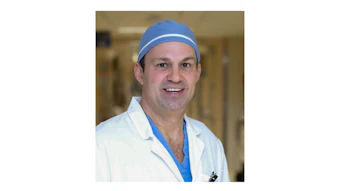
 Boyd R. Viers, MD
“The success has been remarkable and is now reproducible at scale,” he said.
According to Dr. Viers, the Michigan Urological Surgery Improvement Collaborative drove statewide opioid prescribing after ureteroscopy from 83% in 2016 to 13% in 2023—without any increase in emergency department visits. Its prostatectomy pathway dropped discharge opioid prescribing from 82% to 56%, with pain scores numerically better, not worse.
“Our own pathway for perineal reconstructive surgery—urethroplasty, artificial urinary sphincter, urethral sling—discharges 91% of patients with no opioid prescription at all. Zero refills. No new persistent opioid users at 30 days,” he said.
The push toward opioid‑sparing care is driven by sobering data, he added. Approximately 6% of opioid‑naïve patients who fill a postoperative opioid prescription go on to become persistent users. In urology alone, he said, that translates to an estimated 57,000 new persistent opioid users each year.
“Persistent users carry a threefold increase in mortality risk and significantly higher rates of opioid‑related emergency visits and hospital readmissions,” he said. “The prescription is the causal lever—not the surgery. That is the single sentence I want every urologist in the session to walk out with. We are central to the problem, which means we are central to the solution.”
One of the most important mindset changes, Dr. Viers said, is recognizing that almost all urological surgery patients are appropriate candidates for non‑opioid pain pathways. Rather than reserving opioid‑sparing strategies for select cases, current evidence supports making multimodal non‑opioid analgesia the default approach.
In fact, he said, certain patient populations warrant especially aggressive opioid avoidance, including adolescents and young adults, patients with a personal or family history of substance use disorder, those with mental health comorbidities and patients already receiving chronic opioid therapy. For patients who cannot take NSAIDs, emerging non‑opioid agents are beginning to fill important gaps.
Dr. Viers recommends five concrete actions to achieve non-opioid pain management, including:
- Schedule acetaminophen and NSAIDs on a fixed schedule rather than as needed.
- Partner with anesthesia colleagues to use regional nerve blocks whenever feasible.
- Match opioid pill counts to the specific procedure, recognizing that zero is now an acceptable default for many operations.
- Use electronic prescribing to manage breakthrough pain, not prophylactic pain control.
- Recognize that avoiding the initial prescription prevents persistent use.
During the session, Dr. Viers will also discuss suzetrigine, the first novel non‑opioid acute pain medication approved by the FDA in more than two decades. Approved in January 2025, the drug represents a new mechanism for pain control, though experts caution it is not yet a paradigm shift for urology.
Beyond individual practice changes, Dr. Viers said system‑level collaboration has also proven effective. In Michigan, payer‑provider partnerships tied opioid stewardship to pay‑for‑performance incentives, resulting in safer care and improved financial outcomes for participating practices.
“Urology has the tools. We have the guidelines, the multimodal pharmacology, the regional anesthesia techniques, the procedure-specific prescribing recommendations and now early evidence on novel non-opioid agents,” he said. “The challenge is no longer invention; the challenge is adoption.”