Bladder transplantation changes the game
History-making procedure paves the way for the future treatment of end-stage bladder dysfunction.

End-stage bladder dysfunction has been a health problem for as long as people have had bladders, and, until recently, patients were treated mostly with intestinal-based reconstructive options. However, in 2025, the first human bladder transplant was performed by surgeons at UCLA Health, creating a new pathway for those suffering from this condition.
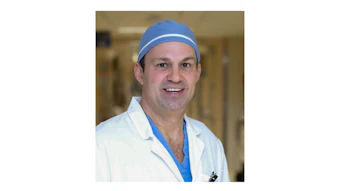
In a State-of-the-Art Lecture: Bladder Transplantation: A New Frontier at the 2026 AUA Annual Meeting, Nima Nassiri, MD, assistant clinical professor of urology at the UCLA David Geffen School of Medicine and director of the UCLA Vascularized Composite Bladder Allograft Transplant Program, will discuss that procedure and how it could change the future of bladder treatment.
 Nima Nassiri, MD
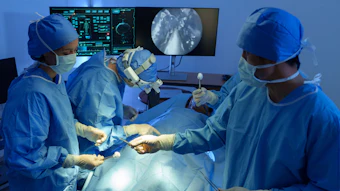
The patient in this case had lost most of his bladder after a partial cystectomy for urachal adenocarcinoma, leaving what was left too compromised to function. He also had both of his kidneys removed due to renal cancer and had been on dialysis for seven years. The procedure, which involved transplanting the bladder along with a donated kidney, took about eight hours. Amazingly, kidney function improved immediately with no need for dialysis following surgery, and urine drained properly into the new bladder.
Dr. Nassiri said the procedure helped establish bladder transplantation as a reproducible, organ-level, vascularized composite allograft (VCBA) with defined surgical workflows for donor recovery and recipient implantation.
“Through extensive preclinical refinement and clinical translation, we have a standardized approach to vascular anastomoses and urinary reconstruction that supports early graft viability and function,” he said. “The significance of this is that it moves bladder transportation from a conceptual innovation to a scalable clinical procedure, creating a new reconstructive option for patients with end-stage bladder dysfunction who have limited alternatives.”
One of the keys to the procedure’s success as a transplantable organ, according to Dr. Nassiri, lies simply in the accessibility of the bladder for immunologic and visual surveillance.
“The bladder’s accessibility allows for routine cystoscopic evaluation and biopsy, enabling early detection of rejection and immune surveillance in a way that is not feasible for most solid organs,” he said.
As part of his lecture, Dr. Nassiri said he will discuss the scientific rationale for treating the bladder as an independently vascularized organ, the surgical innovations enabling donor organ recovery and recipient implantation and the design of the clinical trial that helped make the procedure possible. Beyond that, he will talk about the future of bladder transplantation, which he said depends on the outcomes of the first-in-human clinical trial.
“If the trial is successful, the future of bladder transplantation will likely move along three parallel tracks: clinical expansion, immunologic innovation and long-term follow-up,” he said.
On the clinical track, Dr. Nassiri said the field could expand beyond adult cases to include pediatric patients, where the unmet need is arguably the greatest and current reconstructive options carry lifelong morbidity.
“As surgical techniques become more standardized and outcomes more predictable, bladder transplantation could become a preferred option for patients already requiring immunosuppression, particularly kidney transplant patients with hostile bladders,” he said.
On the immunologic front, Dr. Nassiri said the most important evolution will be defining the immunological milieu and tailoring immunosuppression. Along these lines, current innovations in immunosuppression-free transplantation through immune tolerance strategies are exciting avenues of ongoing research. The goal here would be to reduce or eliminate lifelong immunosuppression.
“Because bladder transplantation is life-enhancing rather than lifesaving, its long-term viability as a field depends on minimizing immunosuppressive burden,” he said. “Advances in donor-derived hematopoietic stem cell mobilization and immune monitoring would be central to this effort."
And finally, Dr. Nassiri said broader adoption will depend on infrastructure, reimbursement and scalability. Critical to this will be early engagement with payers and demonstration of cost-effectiveness relative to chronic diversion and its complications.
“As regulatory pathways mature, bladder transplantation has the potential to evolve from a first-in-human innovation to an accepted option for well-selected patients, while also serving as a model for other genitourinary composite tissue transplants,” he said. “But all of this depends on the clinical trial. So, first things being first, we need to complete that and report on the short- and long-term outcomes.”
Dr. Nassiri said he hopes the audience will approach his talk with a critical lens and thoughtfully evaluate whether the points and conclusions are valid.
“We actively welcome constructive criticism as it strengthens our ability to refine protocols and advance the field,” he said. “At the same time, I hope attendees gain an appreciation for the complexity and effort required to establish a bladder transplant program and—if clinical trial outcomes continue to be favorable—begin to view this as a potential option for appropriately selected patients.”
Ultimately, Dr. Nassiri said that the bladder transplantation procedure represents a highly collaborative, multidisciplinary effort spanning surgery, immunology, ethics and regulatory oversight.
“Bladder transplantation sits at the intersection of innovation and responsibility,” he said. “And its success depends not only on technical execution, but also on thoughtful patient selection, rigorous monitoring and transparency in outcomes.”