A scalpel-free future for kidney tumors?
As histotripsy enters clinical trials, a needleless approach to RCC raises new possibilities—and new questions.

Appropriately calibrating treatment intensity to underlying disease biology remains a challenge in renal cell carcinoma (RCC). This can lead to overtreatment of some renal masses that are unlikely to ever cause harm and undertreatment of patients who ultimately progress.
Alexander Kutikov, MD, chair of the department of urology at the Fox Chase Cancer Center in Philadelphia and co-executive director of the Fox Chase Temple Urologic Institute, will discuss how focal therapy may address this challenge during the State-of-the-Art Lecture: The Emerging Role of Focal Therapy in Renal Cell Carcinoma at the 2026 AUA Annual Meeting.
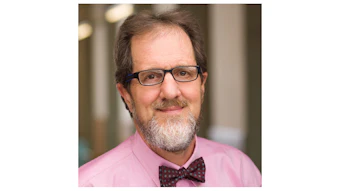
“Focal therapy bridges two main management strategies for small renal masses: active surveillance and surgery. In principle, it allows treatment of the tumor while exposing patients to less risk than surgical intervention,” Dr. Kutikov said.  Alexander Kutikov, MD
However, focal therapy for RCC has its limitations. For example, current methods require percutaneous access and tissue puncture, making access to certain masses challenging, risky or impossible.
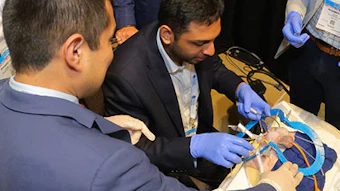
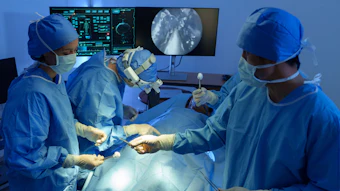
A novel technology known as histotripsy is now emerging. Histotripsy uses focused ultrasound cavitation to achieve nonthermal, needleless tissue destruction. However, histotripsy remains unproven in kidney cancer and is appropriately confined to clinical trials. Its feasibility depends on anatomy and acoustic access, and its long-term oncologic performance remains unknown.
“This is the nature of innovation. The ablation space is already crowded, the technology is expensive, and it remains unclear whether adoption will be driven primarily by urologists or interventional radiologists, factors that may influence its clinical traction,” said Dr. Kutikov.
Clinical trials evaluating histotripsy for RCC are ongoing, and preliminary experience remains limited. Early feasibility studies are underway to determine safety, technical success and appropriate patient selection.
While histotripsy is an exciting technology, it may face challenges to widespread adoption, given the platform's cost and the uncertain incremental benefit over existing ablation techniques.
During the session, Dr. Kutikov will review the current role of focal therapy across the treatment spectrum for renal mass, including its relationship to active surveillance and surgery, the limitations of existing ablation modalities and the importance of matching treatment intensity to tumor biology. He will also discuss emerging technologies such as histotripsy.
Dr. Kutikov said he hopes urologists will understand that focal therapy should not be viewed as a replacement for active surveillance or a substitute for surgery in patients with complex tumors that require surgical expertise. Rather, it may play a role in carefully selected patients for whom treatment is preferred, but the surgical risks are less appealing.