Rethinking cancer detection
Urology challenges long‑held assumptions about cancer screening and survival.

“Don’t go borrowing trouble” is an idiom that may best reflect a new concept in cancer detection, and one that urologists are willing to accept.
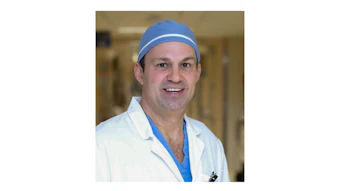
Challenging the widely held beliefs associated with cancer detection and diagnosis, as well as what the evidence does—and does not—support, is the focus of the AUA2026 Ramon Guiteras Lecture: What Urologists Have Taught Us About Screening and Incidental Detection in Cancer (or at Least, What They’ve Taught Me). Led by H. Gilbert Welch, MD, MPH, the session examines the concept of cancer “overdiagnosis.”
In the past, cancer was typically diagnosed only in people with bothersome symptoms. In Dr. Welch’s presentation, the focus will be on three increasingly common alternative pathways to a cancer diagnosis: screening (looking for cancer in people without symptoms of the disease), surveillance (looking for recurrence of cancer in patients who were treated and feel well) and incidental detection (stumbling upon a cancer while evaluating an unrelated problem—often through imaging).
“Finding cancer in a patient without symptoms may seem like a good thing, but it isn’t always,” said Dr. Welch, a general internist and cancer researcher at the Center for Surgery and Public Health at Brigham and Women's Hospital in Boston. “Urologists have taught us that the harder we look for cancer, the more we find. Some of these cancers in asymptomatic people are not destined to cause problems, much less death. This is cancer overdiagnosis. To their credit, urologists have been among the most willing to acknowledge overdiagnosis and address it.”
Drawing on decades of research and clinical observation, Dr. Welch argues that although the purpose driving cancer screening, surveillance and incidental detection differ, they lead to the same result: diagnosing cancer in patients who have no symptoms. The critical issue, he said, is not simply how much cancer is detected, but whether the detected cancer “actually matters.”
A central principle to be explored in his presentation is that cancer detection rises with “diagnostic scrutiny.” In urology, he noted, this concept was empirically tested around the turn of the millennium when clinicians increased the number of biopsy cores taken during prostate biopsy. As expected, more intensive sampling led to more prostate cancer diagnoses, demonstrating that observed cancer incidence reflects, in part, how hard clinicians look.
This same phenomenon played out nationally with the introduction of PSA screening, he said. For example, Dr. Welch said prostate cancer incidence in the United States nearly doubled over a six‑year period, a change often attributed to rising disease prevalence. However, according to Dr. Welch, increased testing, higher resolution imaging and lower thresholds for labeling abnormalities as cancer can also drive incidence upward, independent of true disease risk.
Dr. Welch recalled a pivotal moment in his own career following a consultation with a urologist in the early 1990s that involved a patient who presented with hoarseness and was unexpectedly diagnosed with kidney cancer.
“The urologist noted that five‑year survival for kidney cancer had nearly doubled since 1950 due to earlier detection. While the survival data were accurate, a deeper look revealed something striking: Kidney cancer mortality had not declined,” he said.
That paradox of “rising survival without falling mortality” led to landmark research showing that, across the 20 most common solid tumors, improvements in five‑year survival were more strongly associated with rising incidence than with reduced deaths, Dr. Welch said. The explanation, he argues, is that as detection intensifies, more patients are diagnosed earlier and with less aggressive disease, making outcomes appear better even if lives are not actually being saved.
“The fundamental takeaway is this: Symptoms matter. Patients with symptoms seek care and can judge whether treatment helps them feel better,” Dr. Welch said. “Patients without symptoms can do neither—they must rely on our judgment. The goal is not to find more cancer; it is to find the cancer that matters.”
According to Dr. Welch, urologists have been among the specialties most willing to confront this reality. The field pioneered active surveillance for small, incidentally detected renal masses and has played a leading role in redefining PSA screening, particularly in men with limited life expectancy, and promoting surveillance for low‑risk prostate cancer.
Additionally, advances in imaging technology have further intensified the challenge, he said. Over the past four decades, CT imaging has evolved from millimeter-thick slices to sub-millimeter resolution, dramatically increasing the detection of small, often clinically insignificant abnormalities.
Dr. Welch said the session is geared for live, discussion‑based learning. Although research studies answer focused questions, they do not always reveal broader patterns, such as the cumulative impact of diagnostic intensity across populations.
“Research [alone] doesn’t always help clinicians see the bigger picture. When you read the literature one study at a time, it can be hard to recognize overarching patterns—like how often we detect disease that may never matter to patients,” he said.