New intravesical therapies show promise in NMIBC trials
Emerging treatments may improve outcomes and reduce toxicity for patients with non-muscle invasive bladder cancer.
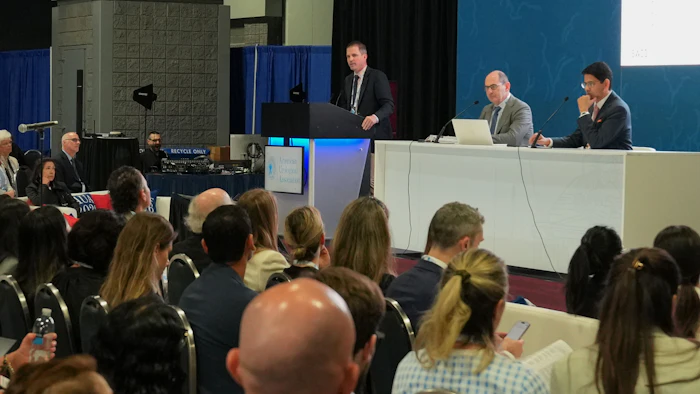
Up to 80% of patients with non-muscle invasive bladder cancer (NMIBC) experience recurrence after treatment. Nearly a quarter (23%) of recurrent patients have five or more recurrences in their lifetime. Clinical trials drive improvements in outcomes and quality of life with new approaches and new treatments for patients with NMIBC. Sunday’s “Clinical Trials in Progress: Bladder Cancer” highlighted investigators from more than a dozen ongoing clinical trials, most targeting novel, bladder-sparing intravesical approaches. Here are highlights from four of them. Mark Tyson II, MD, MPH
ARCIS targets recurrence with combination therapy
The community has largely adopted gemcitabine/docetaxel (GEM/DOCE) as the standard of care for NMIBC, but most patients still progress to radical cystectomy. A Randomized Comparison of Intravesical TherapieS (ARCIS) uses GEM/DOCE as the comparator for a promising competitor, cretostimogene/gemcitabine (CRETO/GEM) for patients with bacillus Calmette-Guérin (BCG)-unresponsive NMIBC.
If approved by Southwest Oncology Group, ARCIS will be the first head-to-head comparison of two of the most promising NMIBC treatments for patients with papillary NMIBC that is not responsive to BCG. Patients will be followed until the first high-grade event, with event-free survival as the primary outcome. Investigators plan to enroll about 300 participants.
“In combination, CRETO/GEM has the potential to establish a new standard of care,” said Mark Tyson II, MD, MPH, who is a urologic oncologist at Mayo Clinic. Seth Lerner, MD
SURF302 targets efficacy and tolerability
FGFR mutations drive many NMIBCs, and FGFR3 drives an enormous burden of morbidity in early-stage urothelial cancer (UC). About 75% of UC patients present with NMIBC, and about 30% of intermediate-risk (IR) NMIBC recurs within one year. Up to 40% of disease recurs within two years. Despite a low rate of progression, patients face an escalating physical and emotional quality of life burden with repeated transurethral resection of bladder tumor (TURBT) and intravesical therapies.
FGFR3 alterations are present in up to 80% of NMIBC and 96% of low-grade upper tract urothelial carcinoma, but current FGFR agents are nonspecific and inhibit FGFR1/2/3/4. FGFR1/2/4 inhibition is associated with multiple toxicities, including hyperphosphatemia, nail disorders, stomatitis, serious central retinopathy and more. Data in metastatic UC show far fewer toxicities with dabogratinib, a selective oral FGFR3 inhibitor.
SURF302 is an ongoing multicenter, open-label phase 2 trial of dabogratinib in adults with FGFR3-altered low-grade NMIBC with two cohorts of 30 patients on 60 mg or 50 mg doses. The primary endpoint is complete response (CR) at 90 days.
“Our target CR rate is 70%, and if we hit that, we’ll go into an expansion study of about 150 patients,” said principal investigator Seth Lerner, MD, professor and Beth and Dave Swalm Chair of urologic oncology at Baylor College of Medicine in Houston. Christopher Pieczonka, MD,
MoonRISe-2 evaluates sustained FGFR inhibition in IR NMIBC
Despite multiple treatment options for patients with IR NMIBC, recurrence is still over 60% at five years. The MoonRISe series aims to develop an intravesical drug-releasing system, Edra-iDRS, for the sustained release of the pan-FGFR inhibitor erdafitinib in three-month delivery cycles. The device is inserted using a urinary placement catheter during a brief office visit.
A first-in-human study in patients with FGFR-altered IR NMIBC showed an 89% CR rate with a median duration of 18 months and good tolerability. Intravesical dosing may minimize systemic exposure and reduce toxicities.
MoonRISe-2 is a phase 2 expansion of the first-in-human trial of Edra-iDRS as an ablative treatment in recurrent IR NMIBC. The primary endpoint is the overall CR rate. Key secondary endpoints include duration of CR at three months as well as TURBT-free survival, safety and tolerability in patient-reported outcomes.
The trial is fully enrolled with 140 patients at 52 sites across seven countries, said Christopher Pieczonka, MD, chief executive officer of Associated Medical Partners of NY and corporate director of research for US Oncology Partners. Brian Mazzarella, MD
MoonRISe3 investigates outcomes after BCG treatment
MoonRISe3 is a phase 3 comparison of Edra-iDRS versus investigator’s choice of single-agent intravesical chemotherapy in patients with papillary-only high-risk NMIBC who have been treated with BCG and have FGFR alterations. Recurrence risk is up to 40%, and about 20% of patients are intolerant of BCG.
Patients in the trial have refused radical cystectomy or are ineligible. The primary endpoint is disease-free survival at two years. Secondary endpoints include recurrence-free survival, time to next intervention, time to disease worsening, time to progression, overall survival and patient-reported outcomes.
“The first patient was enrolled in November 2025,” said Brian Mazzarella, MD, clinical research leader at UrologyAustin. “Enrollment continues at 104 sites in 15 countries. If you have an eligible patient, my co-investigators and I would love the opportunity to enroll this patient and take care of them on the clinical trial.”