The hidden cost of looking harder for cancer
Aggressive screening distorts survival statistics and fuels unnecessary treatment in asymptomatic patients.
Historically, cancer has been diagnosed in individuals showing symptoms. However, recent efforts to promote increased screening have resulted in more diagnoses among asymptomatic patients.
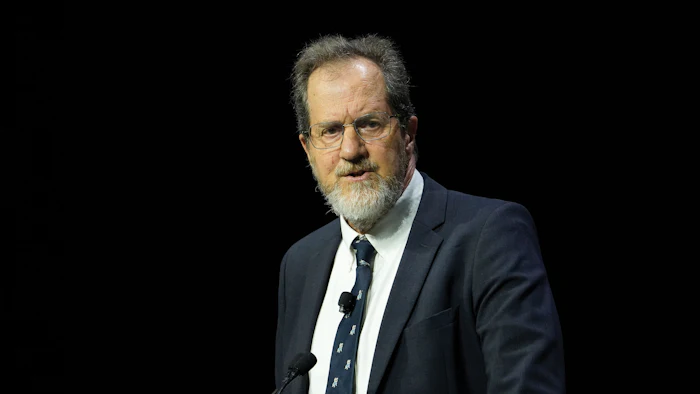
H. Gilbert Welch, MD, MPH, a general internist and cancer researcher at the Center for Surgery and Public Health at Brigham and Women's Hospital in Boston, used the annual Ramon Guiteras Lecture during Friday morning’s Plenary to explore the concept of cancer “overdiagnosis.”
“If you look harder for cancer, you find more,” Dr. Welch said. “All medical students are taught that incidence is the true occurrence of disease, but it's not just that. It's influenced by how hard we're looking for cancer.”
Dr. Welch also clarified that increased screening results in more diagnoses. For some, this might suggest a higher prevalence of the disease and the necessity for extra measures. However, some of these cancers will be detected in asymptomatic individuals and may never lead to problems, much less death. As a result, the average patient tends to appear healthier as the number of diagnoses increases. This perceived improvement can be quite influential; it can also be quite misleading.
Dr. Welch used five-year survival rates to illustrate his point. He suggested that many physicians and public health professionals link higher survival with lower mortality, but this isn't always correct. To better understand this, it's important to remember that survival rates are calculated by dividing the number of diagnoses by the number of patients alive at the time being examined. As diagnoses rise, the survival rate can increase even if the death rate stays the same.
To put this in perspective, the 10-year survival rate for melanoma skin cancer increased from 50% to nearly 100% between 1971 and 2018, yet the death rate remained unchanged. Conversely, the 10-year survival rate for lung cancer improved only slightly, but the death rate has halved.
These misleading figures impact not just health care providers but also shape popular culture. As diagnosis rates rise, more survivors share their stories. Furthermore, more people believe they owe their lives to a screening test, serving as evidence of screening's success.
Of all specialties, Dr. Welch said he believes urologists understand the problem of overdiagnosis best and are taking steps to address it. For kidney cancer, they initiate active surveillance for small renal masses, and for prostate cancer, they make the case for active surveillance in low-risk disease.
“These approaches make use of what I call the diagnostic value of time. Not trying to decide something about phenotype at a single point in time, but instead, observing it over time and getting more data on growth. Time provides information,” Dr. Welch said.
In terms of surveillance following treatment for curative intent, an analysis of 12 trials found no significant difference. Although recurrence markedly increases risk, knowing earlier doesn’t extend patients’ lives.