New stone guidelines sharpen focus on patient-centered care
Revised AUA guidance incorporates quality of life, shared decision-making and evolving surgical technologies for kidney and ureteral stones.
In 2026, the AUA released revised guidelines for the surgical management of kidney and ureteral stones that consider quality of life and patient-centered outcomes.
“The guideline consists of 60 statements that encompass the treatment evaluation of kidney and ureteral stones in both adult and pediatric patients, as well as the treatment of pregnant patients,” said Margaret S. Pearle, MD, PhD, guideline panel co-chair. “Five are classified as strong recommendations, nine are classified as moderate recommendations and 29 are conditional recommendations, in which there's a balance between the benefit and risk of a particular action.”
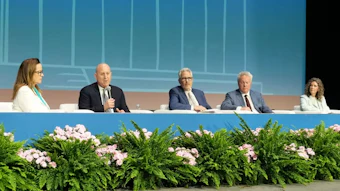
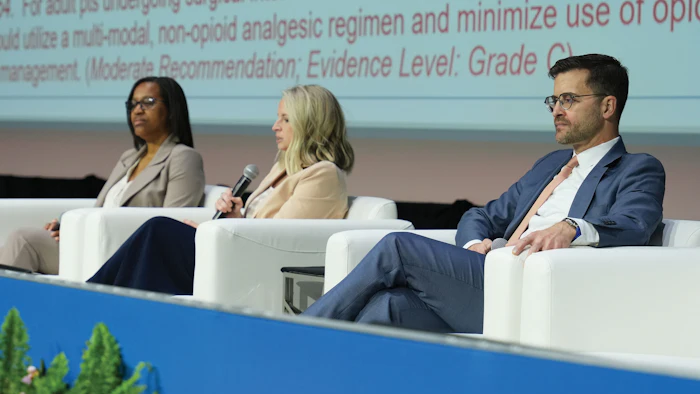
Dr. Pearle was the moderator of Saturday’s session, “Case-Based NEW Guidelines Panel Discussion: Surgical Management of Kidney Stones,” and was accompanied by two guideline panel members: Kymora Scotland, MD, PhD, an assistant professor of surgery at UCLA, and Greg Tasian, MD, MSc, MSCE, a professor of surgery and epidemiology at The Children’s Hospital of Philadelphia, as well as Taylor Brewer, an advanced practice provider from Vanderbilt University.
The session reviewed shock wave lithotripsy (SWL), ureteroscopy (URS) and percutaneous nephrolithotomy (PCNL and mini-PCNL). Based on expert opinion, clinicians should not offer SWL as first-line therapy for adult patients with kidney stones greater than 1 centimeter in the lower pole or greater than 2 centimeters in the non-lower pole.
“We found that for lower pole kidney stones greater than 1 centimeter in size, PCNL has the highest stone-free rate. So, in statement 19, we recommended that clinicians inform patients of this fact. Now that's a strong recommendation,” Dr. Scotland said.
When comparing standard versus mini-PCNL, one change in these guidelines is that mini-PCNL can be offered for stones up to 3 centimeters, and clinicians may offer either option. However, it's important that clinicians inform patients that the two have comparable stone-free rates, but that mini-PCNL is associated with fewer complications.
Regarding preparation prior to surgery, a new statement was added to the guidelines.
“Statement 24 is new to the guidelines. Clinicians may perform PCNL in adult patients without discontinuing daily low-dose aspirin. There were multiple studies that the panel reviewed, and they did not show increased bleeding risk or any issues with the stone-free rate,” Brewer said.
Finally, the panel discussed strategies to enhance the effectiveness and efficiency of URS.
“Statement 47 really brings us into the contemporary era of URS with flexible and navigable suction (FANS) sheaths. In the literature comparing FANS to standard ureteral access sheaths (UAS), FANS consistently have higher stone-free rates, lower postoperative fever, pain and better quality of life. However, this recommendation remains conditional despite having two trials and six cohort studies because of the risk of bias in these studies,” Dr. Tasian said.
This guideline expands beyond previous ones by emphasizing quality of life and patient-centered outcomes alongside objective measures. It aims to facilitate shared decision-making between the patient and clinician to ensure that treatment choices align with the patient's objectives and optimize outcomes.