Advocacy rewrites the label for HRT
A black box warning is lifted, marking a turning point for menopause care and a win for urology-led advocacy.

Advocacy works. The Food and Drug Administration recently removed the black box warning from menopausal hormone replacement therapy products in response to a nationwide public advocacy campaign.
“This is a historic change for the FDA, which, for 20 years, had blanket warning labels on all estrogen-containing products that didn’t appropriately represent the real data,” said Rachel Rubin, MD, assistant clinical professor in urology at Georgetown University in Washington, DC. “The FDA agreed to change the warnings and remove the black box entirely on vaginal estrogen products. This was a culmination of advocacy, especially by the American Urological Association with its 2025 guidelines on the Genitourinary Syndrome of Menopause (GSM). The AUA played a key role in the advocacy behind these giant changes at the FDA.”
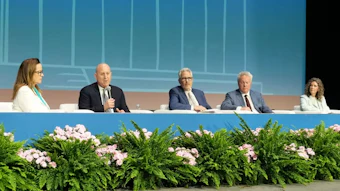
Dr. Rubin will deliver a State-of-the-Art Lecture, FDA Removal of Black Box Warning From Menopausal Hormone Replacement Therapy Products, 8:45-9 a.m. today in Hall D. Her lecture will focus on AUA guidelines and advocacy that led to these historic changes.
The black box warning stemmed from early misinterpretations of the Women’s Health Initiative, suggesting that all hormone replacement therapy increased the risk of cardiovascular events and cancer. A more thoughtful examination found that not all hormones carry the same risks.
The evidence shows that low-dose vaginal estrogen-containing products are safe and do not increase cardiovascular, cancer or dementia risks. The black box warning was depriving patients of safe and effective approaches to treating and preventing GSM and recurrent urinary tract infections.
The AUA led the way with the 2019 guidelines on the management of urinary tract infections (UTIs), Dr. Rubin said. Those early changes were expanded to the GSM guideline, published with the Society of Urodynamics, Female Pelvic Medicine and Urogenital Reconstruction (SUFU) and the American Urogynecologic Society (AUGS). The GSM guideline was endorsed by the International Society for the Study of Women’s Sexual Health (ISSWSH), the Sexual Medicine Society of North America (SMSNA) and The Menopause Society (TMS).
The guideline advises clinicians to offer the option of local low-dose estrogen to patients with GSM to improve vulvovaginal discomfort or irritation, dryness and/or dyspareunia. Clinicians should recommend low-dose vaginal estrogen to reduce the risk of future UTIs for patients with GSM and recurrent UTIs.
Menopause advocacy is growing, and urologists are playing a key role.
Urologists are tasked with navigating some of the deadliest and most bothersome menopause symptoms described by women. Recurrent urinary tract infections are deadly and can lead to antibiotic resistance and urosepsis.
“Additionally, urologists are treating patients with urinary frequency, urgency and leakage,” Dr. Rubin said. “Not to mention sexual health problems like pain with sex, dryness and a change in arousal and orgasm. “
A large part of menopause care falls to urology, which is why the AUA has been increasing its advocacy and focus on these important health issues.
“Urologists should be at the front of the line treating GSM,” she continued. “This labeling change is a real lesson in the role of urologists in advocacy, not just in the exam room with our patients but changing the way clinicians everywhere practice medicine.”