Break Wave challenges standard lithotripsy approach
Trial finds low-pressure ultrasound cleared 70% of stones without anesthesia or adverse events.
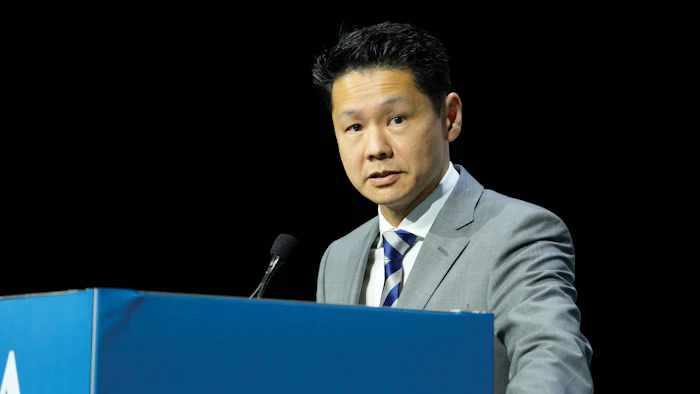
Shock wave lithotripsy has competition. The SOUND trial showed Break Wave lithotripsy is as effective and as safe as shock wave lithotripsy without the need for anesthesia. There were no adverse events in the trial, and 70% of stones were cleared successfully.
“The SOUND trial met its criteria of being noninferior to shock wave lithotripsy,” said Ben H. Chew, MD, MSc, associate professor of urology at the University of British Columbia in Vancouver, Canada. “It was well tolerated with no anesthesia, with the majority of cases being done in the clinic. We had patients who biked into the clinic, were treated successfully, and biked themselves home.”
Shock wave lithotripsy delivers a sharp shock to fragment stone, which can create pain in the surrounding tissue, Dr. Chew said. The Break Wave device uses ultrasound to create a standing wave that fragments the stone. He likened the difference to a boxer delivering a single massive blow to a punching bag versus delivering a timed series of less forceful blows to a speed bag to achieve the same effect.
Break Wave forms a lower pressure, high cycle standing wave that creates a grid of high stress points inside the stone that leads to fragmentation. The pressure inside the stone is 10 times higher than in the surrounding tissue, creating little to no pain or discomfort. Both Break Wave and shock wave lithotripsy shatter stones into fragments and dust that can exit via the ureter. The same Break Wave platform can be used with a different delivery device to move stone fragments into the ureter for clearance.
The trial treated 64 patients at 10 centers across North America with stones >4 mm and <10 mm. Patients were followed for 90 days after a one-week treatment period. The median stone size was 7.8 mm, 6.3 mm for renal stones and 7.3 mm for ureteral stones. Stones had a median hardness of 891 Hounsfield Units, and 29.7% were at the lower pole, with 32.8% at the ureterovesical junction. Most patients (57.8%) had a history of stones.
The median therapy delivery time was 29.7 minutes, with another 14 minutes for discharge. A quarter of patients (27%) required a single retreatment, and none required stents.
The adverse event rate was 0%, with transient hematuria resolving spontaneously at 1.7 days post treatment. Break Wave had a 70% success rate overall, with 98% of all stones showing evidence of fragmentation. Renal stones had a 52% clearance rate, while 87% of ureteral stones cleared.
Lower pole stones had the lowest clearance rate at 47%. A follow-up using a smaller, FDA-cleared probe with a larger acoustic window improved lower pole clearance to 71% and 100% for other stones.