Urology’s many definitions of success
Young Urologists Forum spotlights non‑traditional career paths that merge passion with practice.
This year’s Young Urologists Forum (YUF) at the 2026 AUA Annual Meeting will depart from traditional career advice programming, focusing instead on the evolving professional identities of early-career urologists and the expanding opportunities beyond conventional clinical practice.
Unlike most AUA sessions, which emphasize research presentations and scientific advancement, the Young Urologists Forum will center on the urologist as a person, addressing personal and professional development and shifting focus to nontraditional career paths pursued alongside early clinical practice.
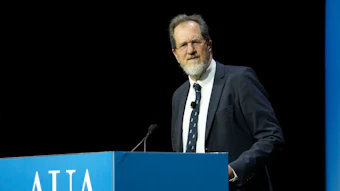
“The forum is not about the urologist the scientist, but the urologist the person,” said Hans Arora, MD, PhD, associate professor of urology at the University of North Carolina School of Medicine in Chapel Hill and chair of the AUA Young Urologists Committee. “Historically, we’ve drawn from a cadre of speakers who are past the early-career stage that can address personal and professional concepts like work-life balance, surgical coaching, improving clinical efficiency and dealing with complications. But this year we’re taking a slightly different tack.”
The 2026 forum, 8:30-11 a.m. in Salon B, is designed to serve early‑career urologists who have chosen to complement their clinical work with innovative and unconventional professional pursuits—options rarely discussed during residency or fellowship training. Speakers are not senior physicians transitioning late in their careers, but rather colleagues and former co‑residents actively building clinical practices while simultaneously exploring alternative career models.
“These are opportunities we sometimes ask ourselves about in fleeting thoughts—the barriers to which sometimes feel insurmountable,” Dr. Arora said. “These aren’t folks who’ve been in practice for 20 years, and after a long and busy clinical career are switching it up. These are our colleagues, friends and former co-residents who are doing these things concurrently while building their clinical practices.”
Dr. Arora said the session will feature rapid-fire, 10-minute TED Talk-style presentations designed to provide practical insights and inspiration. Topics include medical device innovation, locum tenens work and concierge practice models. Attendees will hear concept-to-market tips from Neal Patel, MD, a pioneering Georgia-based urologist with Advanced Urology recognized for transforming patient care through medical device innovation; Mary Beth Westerman, MD, a University of North Carolina School of Medicine associate professor of urology, who has developed a niche in integrating locum tenens work into a traditional practice; and Amy Pearlman, MD, co-founder of the PRIME Institute, a concierge urology practice in Coral Gables, Florida. Dr. Pearlman will discuss the concierge urology model and its impact on professional satisfaction.
“These will be pearls of wisdom to get you excited not just about what they’re doing, but to foster and nurture that spark in every early career urologist attending as well,” Dr. Arora said.
To ignite curiosity and confidence among early-career urologists, Dr. Arora said the session will inspire attendees to explore professional paths that align with their interests, values and long-term goals. Rather than prescribing a single definition of success, the session aims to demonstrate that fulfilling careers in urology can take many forms—often pursued alongside traditional clinical roles, he said.