Double take: Clinical trial looks at doublet treatment for mHSPC
ARASEC evaluates darolutamide plus ADT without chemotherapy.

Level 1 evidence now supports intensified treatment for metastatic hormone-sensitive prostate cancer (mHSPC), including androgen receptor pathway inhibitors combined with androgen deprivation therapy (ADT) and, in some patients, triplet therapy that adds docetaxel. However, a significant number of patients in the United States still receive ADT alone.
Closing this gap between guideline-concordant care and everyday practice remains one of the most pressing needs in the field.
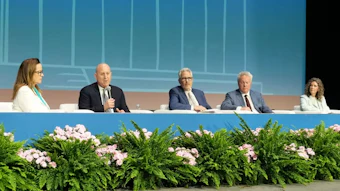
Rana McKay, MD, professor of medicine, urology and radiation medicine at the University of California, San Diego, and associate director of clinical sciences at the Moores Cancer Center, will be presenting the initial ARASEC data at today’s session P2s: Practice-Changing, Paradigm-Shifting Clinical Trials in Urology: Darolutamide Plus Androgen Deprivation Therapy (ADT) in Metastatic Hormone-Sensitive Prostate Cancer (mHSPC): ARASEC—U.S. Prospective, Open-Label Phase 2 Study With an External Control.
Darolutamide is a second-generation androgen receptor pathway inhibitor with a unique structural profile that results in low blood-brain barrier penetration and minimal off-target binding. Consequently, it has demonstrated a favorable tolerability profile in previous phase 3 trials, with incidence rates of fatigue, falls, fractures, cognitive effects and rash comparable to those of placebo
plus ADT.
Darolutamide also has fewer clinically significant drug-drug interactions compared with other agents in the class, which is particularly relevant for the mHSPC population, where polypharmacy and comorbidity are common.
“Darolutamide plus ADT is already established as a standard of care in mHSPC, based on the ARASENS triplet regimen with docetaxel. The question ARASEC addresses is whether the doublet of darolutamide plus ADT, without chemotherapy, offers a compelling option for patients in whom docetaxel is not appropriate or not desired. That is a very common clinical scenario,” Dr. McKay said.
The ARASEC data are practice-changing because they provide prospective evidence of darolutamide plus ADT activity in a contemporary U.S. mHSPC population, offering clinicians and patients another option in a setting where treatment intensification remains underutilized. The trial design itself is paradigm-shifting. ARASEC is a prospective, open-label phase 2 study with an external control arm, a methodology that is increasingly relevant as randomization against ADT alone is no longer ethically or practically feasible in this disease. How clinicians generate and interpret evidence from external control designs represents a shift for the field.
“I want to preserve the findings for attendees. What I can say is that the results speak to both the activity of the doublet in a contemporary U.S. population and to the feasibility of the external control methodology. Attendees should come prepared for a discussion not only of the efficacy and safety signals, but of how this kind of evidence fits into our decision making for individual patients.”
Dr. McKay said.