Favorable, yet unproven support for focal therapy
Long-term studies on safety and recurrence drive adoption of the treatment.
Focal therapy to treat early-stage prostate cancer seems like a good idea. Considered a management strategy to apply the concept of partial organ resection to the prostate, much like a partial nephrectomy or thyroidectomy, studies indicate it has a relatively favorable rate of urinary and sexual side effects compared to conventional therapy. So why, then, is the approach so hotly debated?
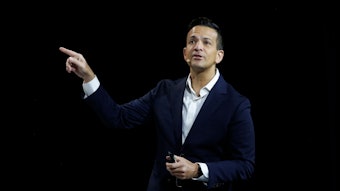
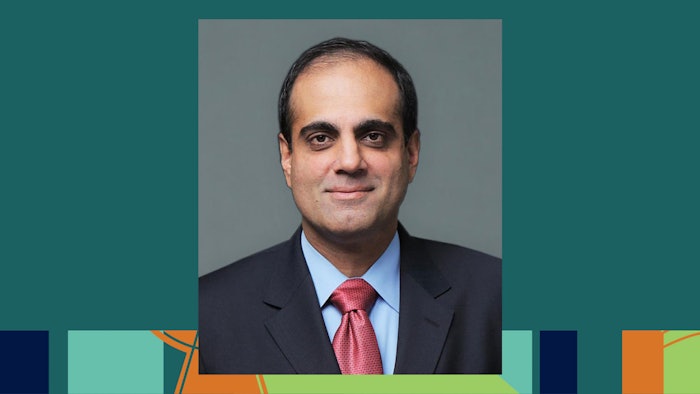
Samir S. Taneja, MD, professor of urology, radiology and biomedical engineering at New York University’s Grossman School of Medicine and Tandon School of Engineering, has taken on the task of addressing that debate on the Plenary stage. Dr. Taneja will lead the session, “State-of-the-Art Lecture: Focal Therapy in Prostate Cancer: Prime Time or Not Time?” as well as the debate that follows, “Crossfire: Controversies in Urology: Intermediate-Risk Prostate Cancer: Is Focal Therapy a Suitable Option for All Cases?” at the 2025 AUA Annual Meeting. He said what makes the treatment debatable is likely the conventional belief that prostate cancer is a multifocal disease and therefore cannot be adequately treated in a focal manner.
“I believe there is growing interest in focal therapy in the urological community, and more and more practitioners reach out to me to discuss how to start a program. The desire to integrate focal therapy is based upon the clear evidence from short-term studies that very reasonable loco-regional control can be achieved with less impact on quality of life than conventional treatments,” Dr. Taneja said. “Despite this, its use in standard practice does remain quite controversial, as there is a paucity of long-term follow-up beyond 10 years, inconsistent follow-up methods and quality and an absence of comparative data with conventional treatments.”
In a forward-thinking move, Dr. Taneja said most academic centers are initiating programs in focal therapy, both for purposes of investigation and clinical implementation. Challenges remain in mapping the extent of the tumor, defining the optimal method of targeting and ablation and defining the best way to determine success, according to Dr. Taneja. As focal therapy represents a novel treatment paradigm in which intervention seeks to reduce or remove metastatic risk through selective destruction of clinically significant disease rather than all disease, it requires a different mindset in approach, he added.
It’s that view of prostate cancer as multifocal that creates concern within the urology community, he said, raising questions about the long-term safety and recurrence of disease. Dr. Taneja said he believes the pervasive perception that prostate cancer is inevitably multifocal is what drives reluctance in adopting the treatment as an effective approach. This, he said, reflects the gap in conceptual understanding that needs to be bridged through continued dialogue and exploration.
“As focal therapy is primarily emerging as a prostate cancer management strategy, rather than a single intervention or treatment, recurrence in the prostate would not be viewed as failure,” he said. “Instead, recurrence and re-treatment would be viewed as part of the continuum of the management strategy. As the goal is mitigation of metastatic progression through the patient's natural longevity, clinicians must learn to view this as the primary benchmark for treatment failure.”
During the session, Dr. Taneja will review the current data supporting the rationale for and implementation of focal therapy in practice as well as the limitations of available data, potential risks and concerns regarding lack of standardization in candidate selection, patient follow-up and management of recurrence.
Accordingly, the debate that follows will offer evidence-based information regarding the utility and safety of prostate cancer focal therapy in current practice. Hashim Ahmed, MD, PhD, professor of urology at Imperial College in London, and Lara Rodriquez-Sanchez, MD, PhD, urology faculty at Institut Mutualiste Montsouris in Paris, France, will present the argument in favor of focal therapy. Edward Schaeffer, MD, PhD, professor of urology at Northwestern University Feinberg School of Medicine in Chicago, and Himanshu Nagar, MD, MS, director of genitourinary oncology in the department of radiation oncology at Memorial Sloan Kettering Cancer Center in New York, will present the opposing arguments.
Upon completion of both the session and debate, Dr. Taneja said he hopes urologists will understand that focal therapy does not just represent a treatment alternative to conventional therapy, but instead represents a paradigm shift in our thought process about the disease. Specifically, Dr. Taneja said he believes focal therapeutic interventions seek to prolong the natural history of a disease with an already long, natural history and minimize the need for radical intervention in a person's lifetime.
“If the management of prostate cancer with focal interventions can prolong the natural history of the disease such that men live out their natural longevity, and die of other causes, it has achieved the same endpoint as a 'curative' radical intervention, with far less harm on average,” he said. “This of course, remains to be proven.”